Château de la Haute Chalonnière
The Day of the JackalThe Château de la Haute Chalonnière is a secluded, sparsely inhabited estate in the Auvergne whose quiet domestic isolation gives The Jackal temporary cover. Its emptiness is not merely a backdrop: the estate’s shuttered rooms, small household, and distance from outside scrutiny shape Colette de la Chalonnière’s solitude and help make possible the sudden violence that ends her stay there.
Estate and Household
Colette returns to the château after a leisurely drive from Gap and finds a household reduced to its longtime maid, Ernestine, and the gardener, Louison. Ernestine has served the family since Alfred de la Chalonnière’s father’s day; Louison, formerly a peasant boy, married her when she was still an under-housemaid. The pair now function almost as custodians of the property rather than staff in a busy home.
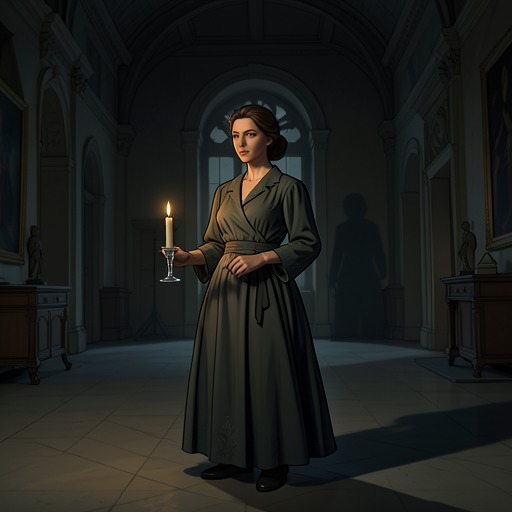
Two-thirds of the rooms are shut away beneath dust covers. Colette recognizes that she is mistress of an empty castle: children no longer play in its park, and no master of the household saddles a horse in the courtyard. The estate’s scale survives, but the family life that once gave it purpose has receded. That contrast makes the château a physical expression of her isolation, rather than a refuge made comforting by its grandeur.
Colette’s Return and The Jackal’s Arrival
Colette’s first response to a letter is anger, but by the following morning it has given way to weary disgust and uncertainty about what to do with the rest of her life. She regrets having come home instead of staying in Gap with the man who had been with her the previous day, imagining that they might have travelled together under a false name. Her private sense of abandonment is interrupted when a village van arrives in the courtyard.
From her bedroom window, Colette sees men unloading goods with Louison’s help. A man who has been concealed behind the van gets into the driver’s seat and drives away, leaving three suitcases and a hand-grip on the gravel. She recognizes the blond man beside them as The Jackal and greets his unexpected return with pleasure. The delivery provides a plausible domestic entrance for a visitor whose luggage conceals something very different from ordinary travel belongings.
The Discovery in the Bedroom
A telephone call soon forces The Jackal to reconsider his plan to remain at the château for two more days. As he thinks over the call, he recalls an unfamiliar soft click on the line, unlike the calls of the preceding three days. The bedroom has an extension phone, and he suspects that Colette may have been listening. He goes upstairs and finds that suspicion confirmed in the room’s disorder.
The wardrobe stands open; all three suitcases have been opened, and the keyring that unlocks them lies nearby. Among the scattered contents are slim steel tubes with their hessian end-caps removed. One exposes the telescopic sight and another the silencer; Colette is holding the rifle’s barrel and breech. The luggage that had arrived as a seemingly ordinary delivery has become evidence of The Jackal’s concealed weapon and intended violence.
Colette understands what she has found: she tells him that he means to kill Charles de Gaulle and identifies him with the Secret Army Organisation. The Jackal’s silence confirms her conclusion. When she rushes for the door, he throws her onto the bed and kills her with blows to the neck. The scene turns the château’s private bedroom from a place of intimacy into the site where the concealed assassination plan is exposed and its witness is silenced.
Seclusion and Narrative Significance
The château’s isolation governs the immediate aftermath. The Jackal listens for a response from downstairs, but hears none. Ernestine is in the kitchen preparing morning rolls and coffee, while Louison is expected to leave for market; both are described as rather deaf. Their ordinary routines continue close by, yet neither registers the killing, allowing him time to reassemble and repack the rifle components.
He places the tubes and weapon parts in the third suitcase with an army greatcoat and the soiled clothes of André Martin, then checks that the papers in the lining have not been disturbed and locks the case. The second suitcase, containing a Danish pastor’s clothes, remains unlocked but has not been searched. The château’s role is therefore both shelter and trap: its quiet gives The Jackal privacy, but its closed rooms bring Colette close enough to uncover the secret hidden in his luggage. Her discovery abruptly changes his plans and makes departure urgent, although the scene does not show him actually leaving.